Sunday, 7 September 2014

Saturn’s Rings, where did they come from?

astro_bk_still1.jpg
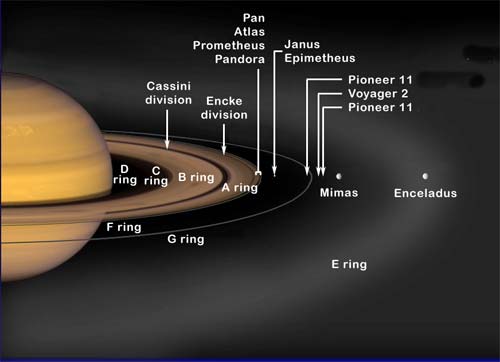
Saturn’s rings are not the only rings of the Solar System, but are well known because of their brightness. This is due to the fact that they are composed of 90-95% particles of water ice, their diameters ranging between micrometres and kilometres across, however the vast majority that make up the rings mass is held in particles ranging from centimetres to meters across. This is a unique property as most planetary bodies in our Solar System contain approximately 50% silicates and metals and the other ringed planets do not share this property. Saturn has a complex ring structure, the main rings are the A, Cassini Division, B and C rings, with diffuse rings including the D, E, F and G rings. The different rings have different origins, such as the E ring which is fed by eruptions from Enceladus, which is a satellite (or moon) within the ring (stay tuned for more on that one in a later blog post!), however this blog post will present theories for the origins of the main ring system.

10_04.jpg

The origin of Saturn’s rings

The origin of Saturn’s rings has long been a captivating mystery of the Solar System. First noted by Galileo in the early 17th century were ‘handles’ appearing around Saturn. Not long after, they were correctly named rings by Christiaan Huygens in 1655 and then Cassini noted their composite structure in 1675. Today, the insight into Saturn’s rings has continued to progress as technology permits, accelerating significantly with the dawn of spacecraft, leading to an ensemble of theories into the rings origins. Below the three main theories, and the validity of those, will be discussed.

Just a note before I begin, the ‘Roche Zone’ is the zone in which the gravity forces (also called tidal forces) from the planet are much too large that particles can not accrete to become anything larger, say a moon, and if a moon or comet where to pass the Roche Limit then it would be ripped apart (depending on its composition and proximity to the planet). Also: when I started researching into this I wasn’t aware that satellite’s aren’t just the man made things orbiting planets, they can be natural too and are pretty much interchangeable with moon – just in case you didn’t know that either! Alright – lets go!

Theory 1: Saturn’s rings are ancient remnants of the planets formation.

Until the spacecraft ‘Voyager 1’ arrived at Saturn in 1980, it was believed that the rings where composed of detritus left behind after the planets formation from a sub-nebula disk, approximately 4.5 billion years ago (What is a nebula disk? Check out blog post from March 2014 - ‘Day Dot’). Due to being within the planets Roche zone, the strong tidal forces on them prevented accretion into anything larger than the order of a few meters in diameter. However, this hypothesis is deemed improbable due to the fact that if this were true, it is assumed that the classical satellites of Saturn would have a similar composition to that of the rings, which is not apparent. Secondly, the rings are void of gases, which is not coherent with the composition of a sub-nebular disk and lastly, the relatively rapid evolutionary rate of rings would mean they would have disintegrated if their origin was at the time of the planets formation.

Theory 2: Saturn’s rings are results of catastrophic collisions.

The second theory was proposed with new information from the Voyager mission. This view suggested there was a catastrophic collision (or collisions) with pre-existing icy moons, either between themselves or with comets. The collisions are assumed to have taken place within the planets Roche zone, so like sized particles could not accrete, the debris then created rings of particles that were captured in the orbit around Saturn. Small moons were also discovered and these were thought to be larger collisional shards left behind from the impact. However, this theory has been doubted by some because of the difference in a moons typical composition of a silicate rich core and that of the almost pure ice rings. This may be explained by small impacts that do not destroy the entire moon, but just its outer layers, much like the formation of Earth’s moon. If the moon was already differentiated into an icy mantle and silicate rich core then the collisions could send the icy particles into space, eventually forming into rings, and the dense core left behind may then have been pulled into Saturn by tidal forces.

Theory 3: Saturn’s rings are results of comets or satellites drifting within the planets Roche limit

The mass of Saturn’s rings is comparable to that of the mass of Saturn’s satellite Mimas, thus this has led to the suggestion that another object of similar size drifted into the planets Roche zone and was destroyed. However, tidal forces alone would not be able to totally destroy a Mimas sized object (200-300km radius) down to particles of approximately a centimetre to a meter in diameter because a body that size would also have its own Roche limit, so another collisional event would have also been necessary. It has been suggested that this ‘object’ may have been a comet caught by Saturn’s gravity in a close passage by the planet and Saturn’s tidal forces then ripped it apart. Although, an issue presents in this theory as the current rate of comet fly-bys is much too low for a close passage to be likely in the last billion years. Furthermore, the discrepancy between the composition of the rings and the composition of a comet, led to this scenario showing further ambiguities.

A recent suggestion by Canup (2010) appears to resolve the composition issue; instead of a comet, a satellite drifted within the planets Roche zone. The formation of large satellites is associated with the generation of a large amount of heat in the interior, which is likely to lead to ice melting and thus, differentiation. As the ice melts, the rock initially contained within the ice is released and due to its higher density it sinks to the core of the satellite resulting in a satellite with a mantle of ice and rock rich core. It is suggested that through the concept of planetary migration a differentiated satellite approached the Roche limit, passing it and thus allowing the tidal forces to strip the outer, icy and less dense layers from the more stable, silicate rich core. As tidal forces are not strong enough to destroy the silicate rich core it will continue towards the planet until it eventually falls into it. 

Canup, 2010

The age of Saturn’s rings

The debate about the age of Saturn’s rings is perhaps even more complex and multifaceted than that of their origin. Some argue that due to the fact that the rings evolution (from meteoroid bombardment causing darkening and viscous spreading) is at a relatively rapid rate (when we say rapid in astronomy we’re talking hundreds of millions of years!), they must be young perhaps forming within the last billion years, while others suggest that the rings are less viscous than previously thought and would thus have a longer evolutionary time scale. On the other hand, if the theory of comet interference were correct, some suggest that the current rate of passing comets is much too low for comet interference to have been apparent in the last billion years, thus suggesting an older formation. A more recent theory of ‘cosmic recycling’ has also been suggested, where the rings are constantly refreshed therefore appearing young however, are primordial. Although, even recycling of the material does not explain their brightness, as meteoroid darkening would still be apparent, so perhaps the total mass of the rings has been underestimated and more pollution has occurred than previously thought. Further research into this issue is needed to resolve the true age of Saturn’s rings.

Overall, the theories of Saturn’s rings origins have progressed astoundingly from the days of the first ever fly by mission of the Voyager 1. Suggestions of the origin of the rings from planet formation have mostly been dismissed due to the rings composition and evolution timescales. Theories of collisional or comet origin seem improbable on evolutionary timescales with the current rate of comet bombardment and also due to their compositional discrepancy, therefore differentiated satellites drifting into the Roche zone has been suggested as a plausible theory. Perhaps, they are older than previous estimates, with cosmic recycling and/or hidden mass; placing the comet bombardment theories once more within reason. To reliably solve this debate further research is essential. Fortunately, with the high quality of spatial and spectral data currently being received from Cassini (the spacecraft orbiting Saturn since 2004), further insight into the mass, composition, structure and particle size of the rings may just bring the resolution to the great mystery of the origin of Saturn’s rings. 

Thanks for reading!

Want to learn more about the Cassini mission? Here is a cool site that has a time line of all Cassini has discovered, interestingly this spacecraft was not expected to last this long but is now projected to keep surveying Saturn until 2017 when it is planned to enter Saturn’s atmosphere! http://saturn.jpl.nasa.gov/interactive/missiontimeline/


References

Canup, R. M. (2010). ‘Origin of Saturn's rings and inner moons by mass removal from a lost Titan-sized satellite’, Nature, 468(7326), 943-926.

Charnoz, S., Dones, L., Esposito, L. W., Estrada, P. R., Hedman, M. M. (2009a). ‘Origin and Evolution of Saturn's Ring System’. In Dougherty, M.K., Esposito, L.W., Krimigis, S.M. (Ed.) Saturn from Cassini-Huygens, Springer, Netherlands, 537-575.

Charnoz, S., Morbidelli, A., Dones, L., Salmon, J. (2009b). ‘Did Saturn's rings form during the Late Heavy Bombardment?’, Icarus, 199(2), 413-428.

Connerney, J. (2013). ‘Solar system: Saturn's ring rain’, Nature, 496(7444), 178-179.

Crida, A., Charnoz, S. (2010). ‘Solar system: Recipe for making Saturn's rings’, Nature, 468(7326), 903-905.

Cuzzi, J. N., Burns, J. A., Charnoz, S., Clark, R. N., Colwell, J. E., Dones, L., Esposito, L. W.,  Filacchione, G., French, R. G., Hedman, M. M., Kempf, S., Marouf, E. A., Murray, C. D., Nicholson, P. D., Porco, C. C., Schmidt, J., Showalter, M. R., Spilker, L. J., Spitale, J. N., Srama, R., Sremcevic, M., Tiscareno, M. S., Weiss, J. (2010). ‘An evolving view of Saturn’s dynamic rings’, Science, 327(5972), 1470-1475.

Porco, C. C., Thomas, P. C., Weiss, J. W., Richardson, D. C. (2007). ‘Saturn's small inner satellites: Clues to their origins’, science, 318(5856), 1602-1607.

Salmon, J., Charnoz, S., Crida, A., Brahic, A. (2010). ‘Long-term and large-scale viscous evolution of dense planetary rings’, Icarus, 209(2), 771-785.


Thursday, 10 July 2014

The effectiveness of Australia’s protected area network to conserve biodiversity.

In my last blog post I mentioned that habitat loss (deforestation/unbanization etc) is the biggest threat to biodiversity globally. The main policy instrument put in place by government’s world over in order to address this issue is protected area systems (like national parks/nature reserves etc) but the validity of this approach is questionable.

In Australia, we are very fortunate to have many endemic flora and fauna that, along with our unique landscapes, attract numerous tourists each year from all around the world. However, due to human activities and industrial development, Australia has seen the extinction of three bird species, four frog species, 27 mammal species and 61 plant species since European settlement. Currently, over 1500 fauna species, and over 3000 ecosystem types, are considered threatened. In response to this, the Australian federal government promised to increase the amount of protected areas (PAs) and created the National Reserve System (NRS) in 1992. This consists of 85 biogeoraphical regions classed on the basis of their geology, morphology, climate and ecology. Australia also became a signatory to the United Nations Convention on Biological Diversity (CBD), thereby entering an international treaty that legally binds the international community to addressing biodiversity loss and recognising its significance to society. Target 11 of the Aichi Biodiversity Targets states:

“By 2020, at least 17 per cent of terrestrial and inland water, and 10 per cent of coastal and marine areas … are conserved through effectively and equitably managed, ecologically representative and well connected systems of protected areas...” (CBD Secretariat, 2011)

PAs are classified as clearly defined regions, which are recognised and managed through legal or other effective means, and are therefore classed as a regulatory policy instrument. They strive to achieve long-term conservation of biodiversity and the associated ecosystem services and cultural values, and to sample the complete range of biodiversity from each region, while separating it from threatening processes to its survival. In Australia 15.45% of terrestrial areas are conserved through PAs and 9.6% of its marine jurisdiction are conserved through marine parks. This coverage extent of PAs appears to be progressing in the right direction to reach the target. However, the effectiveness of PAs as a policy instrument to address the above target of conserving an ecologically representative suite of biodiversity is debatable. While PAs have been a fundamental movement in conservation efforts, and can be referred to as the “cornerstone on which conservation relies” (Margules et al, 2000), the significance of protected areas in environmental policies is continuously debated. Some of the reasons for this debate will be explored below:  

  • Lack of Information:

A lack of information has caused vast ramifications in the development of PAs throughout history. One of the first PAs to be created was Yellowstone National Park in 1872 in the United States, when European settlers wanted to preserve the ‘untouched’ landscape they first witnessed. At this time, much like today, the managers of these parks only had authority within the park borders, which meant that outside of the park borders industrialization and urbanization would continue to prevail, and thus environmental degradation went ahead with no further thought. Through this development of the matrix (which is the area outside of PAs) profound effects are felt on the ecosystems within PAs. Habitat loss and fragmentation are the biggest threats to biodiversity globally and with continued development of the matrix, the connectedness between each of the PAs decreases and patch isolation increases. This results in a decrease in migration between PAs, reducing gene flow between populations; causing a great reliance from the biota on PAs and thus dictating a finite amount of natural habitat and recourses available for each population; the introduction of invasive species from the matrix and susceptibility to abiotic disturbances through edge effects (check out this video for a visual representation of the effects of the matrix https://www.youtube.com/watch?v=JZwTZ-d1ZRE ). The discovery about the effects of the matrix is only a relatively recent discovery in comparison to the commencement of PAs, and thus the correct information requirements were not available in order to enable correct principle design. To this day, it is arguable whether decision-makers have the correct information for the design of correct policy instruments for biodiversity conservation, or when it is there, whether it is being utilised appropriately. Perhaps the greatest uncertainty for the validation of PAs is that the extent to which biota rely upon PAs to ensure their survival is still uncertain. Furthermore, the affects of climate change are hypothesised, but still indefinite. This uncertainty and/or ignorance of facts adds complexity to the ability of PAs to be an effective policy instrument for promoting biodiversity conservation.

  • A lack of flexibility in space and time:

PAs are rather inflexible through both space and time. Some suggest that with the expected changes in species distributions due to climate change the NRS is likely to have an inadequate representation of all habitats. The uncertainty of this prediction, however, has drastic implications for the validity of PAs over a temporal scale. In the likely situation that this does occur, expansion of the NRS PAs in order to meet our CBD obligations would be required. However, further research would need to go into the location of new PAs while considering the finite space available, the overall effectiveness of PAs, and above all a consensus would need to be achieved on this topic.  Furthermore, it is difficult to rehabilitate areas after they have already been degraded, therefore expanding the NRS to incorporate areas that have previously been unprotected may not achieve conservation objectives either, alluding to PAs inflexibility over a spatial scale. The inflexibility of this instrument demeans PAs ability to meet the CBD goals and conserve biodiversity to the essential high standard needed across a significant spatial scale.

  • Costs and benefits:

An effective policy instrument is efficient in terms of achieving outcomes, giving a higher number of positive returns in comparison to initial investments. For PAs this criterion is difficult to fulfil due to the uncertainty surrounding the benefits of conserving biodiversity. PA networks are an expensive investment, and studies in Queensland have estimated that increasing areas by at least 18 million hectares could cost between AU$214 million and AU$2.9 billion, which was largely underestimated by the state government who predicted AU$120 million. This under estimation is rather dubious as it alludes to the lack of funding that is being provided for the establishment and maintenance of PAs, and may be at fault for their inefficiencies and ill management. Nevertheless, this is a large estimate that varies with different land tenures, assumptions and stochastic variability. In any case, the unknown feedbacks from conserving biodiversity, such as future pharmaceutical revelations and sociological benefits, make the efficiency in terms of outcomes difficult to estimate in monetary values. As the payouts from biodiversity conservation are uncertain, and over a much larger temporal scale than initial investments, the importance placed on PAs effectiveness to conserve biodiversity, and the goal in general, is greatly undermined leading to the apparent decline in biodiversity.

  • Complexity and cross-sectorial influence:

Many stakeholders are involved in the effectiveness of PAs; however the domination of political supremacy and economic pressures commonly outcompete the values of conservation efforts. This cross-sectorial influence tends to result in PAs representing a bias, and thus unrepresentative, sample of biodiversity. A study by Watson et al (2011) showed that in Australia 21.1% of critically endangered, 13.9% of endangered species and 10.9% of vulnerable species are not protected by PAs. The neglect of important threatened species is dubious, and is due to the fact that areas of remoteness, or with no potential for development or industrial uses (and thus economical gain), are commonly selected for PAs. Therefore, it is apparent that the PAs of Australia provide virtually no barrier to economical development, however the laws of protection within them are being relaxed in order to increase exploitive uses of them and reap the short-term economical gains. This is likely to cause the deterioration of PAs conservational value, and deviates from the main goals of the CBD.

Furthermore, as PAs rely on the ecological connections through remnant ecosystems on private lands, it is even more concerning that laws about clearing on private land are now being relaxed in Victoria and Queensland. This is of extreme significance due to the subsequent decline of PA connectedness, which is likely to have detrimental affects on biodiversity, further deviating from the CBD objectives. Although there is a great number of studies indicating this probable fate, the limited attention spans of the decision makers in association with current compared to overarching problems demeans the issue, blurring policy making in this area. The cross-sectorial influence is perhaps the greatest hindrance inhibiting the success of PAs as a policy instrument for protecting biodiversity.

  • Enforceability issues:

A successful policy instrument needs to be enforceable, which PAs usually are, consistent with their protection under statutory law; however legal aid funding in New South Wales is now being reduced for public interest environmental cases. With this funding the public is able to bring decision-makers to court over their accountability in environmental and planning logistics, such as forestry operations. Without this funding it is going to be a lot more difficult to hold the states to environmental accountability, thus making it potentially easier for governments to evade penalty for ill-management and exploitation of PAs.

Furthermore, the recent changes to environmental decisions from national government to state governments in order to streamline development in an effort to heighten economic growth (you may have heard of the ‘cutting of green tape’), have had consequences on the enforceability of PAs. Under the Environmental Protection and Biodiversity Conservation Act 1999, the Australian Government Environment Minister is obligated to overlook any developments in areas of significance to conservation. The reforms are supported by the states as a necessity in order to recover from the Global Financial Crisis and stimulate the economy. However, there are concerns that this will result in a drop in the enforceability of environmental standards and lead to exploitation in PAs, which will most probably have significant effects on biodiversity decline. As a regulatory instrument, the effectiveness of PAs relies on their enforceability, without it they can be deemed essentially pointless with regard to meeting the CBD goals.

Summing up..
So, while the National Reserve System of protected areas makes for an impressive amount of land and ocean being attributed to conservation efforts in Australia, they are not supporting the main objective of the United Nations Convention on Biological Diversity, to conserve an ecologically representative suite of biodiversity. While more research is critical in this area, it is becoming discernible that protected areas are not the optimal solution to preserve the precious biodiversity of Australia, with the largest problems residing in the vast temporal scale and uncertainty of the issue, the political bias in protected area locations and the poor enforceability of the regulatory instrument. It is likely that, rather than a reliance on protected areas, a whole suite of policy instruments is needed for successful biodiversity protection. The funding increase by the Australian government in recent years is likely to be an attempt to pull the wool over the eye of the public in a façade of conservation. More realistically, it is essentially an attempt to fuel a short-lived burst of economic intensification. The Australian government may be a signatory to the United Nations Convention on Biological Diversity, however, through faults in the protected area network and lack of other policy instruments to support protected areas, it is clear Australia’s dedication to the objectives are in decline, along with Australia’s biodiversity.

So is there a better option?  
PAs are a form of regulation; a disincentive to perform prohibited activities in a PA because of legal ramifications. With the inefficiencies of the PA system outlined above an alternative scheme must be considered. Another common instrument used in biodiversity conservation is the payments for ecosystem services (PES). PES schemes have been brought into public policy interest as a policy instrument only recently, and they aim to promote biodiversity conservation through the use of positive incentives, such as payments for landowners to conserve remnant vegetation on their land. PES is a voluntary scheme and is thus likely to suffer from contradicting incentives. It is also a possibility that because the landowner will have more experience and local knowledge of their land, and the costs involved with supplying environmental services, an overestimation of payments given to the owner for those services may result. Furthermore, the monitoring of these sites may be cost-intensive and thus the contract not enforced, giving the landowner incentive to breach the contract, by grazing stock for example, and still benefit. However, as PES is a relatively new scheme much uncertainty surrounds its integrity. PAs and PES schemes are both likely to have their faults, however if they were both implemented together in Australia, with scientific validity, perhaps we could move closer to our objectives with the CBD and increase the standard of Australia's biodiversity conservation measures. 


References

Adams, V. M., Segan, D. B., Pressey, R. L. (2011). ‘How much does it cost to expand a protected area system? Some critical determining factors and ranges of costs for Queensland’, PloS one, 6(9), 1 - 11.

Australian Government: Department of Environment, 2012, CAPAD 2012, viewed 20/5/14, available at http://www.environment.gov.au/node/34737

Bleeker, A., Hicks, W. K., Dentener, F., Galloway, J., Erisman, J. W. (2011). ‘N deposition as a threat to the World’s protected areas under the Convention on Biological Diversity’, Environmental Pollution, 159(10), 2280-2288.

CBD Secretariat, 2011, “Aichi Biodiversity Targets”, viewed 20/5/14, available at http://www.cbd.int/sp/targets/

Coad, L., Campbell, A., Miles, L., Humphries, K. (2008). ‘The costs and benefits of protected areas for local livelihoods: a review of the current literature’, UNEP World Conservation Monitoring Centre, Cambridge, UK.

Dovers, S., Hussey, K. (2013). ‘ Environment and Sustainability: A policy handbook’, The Federation Press, Sydney, Australia, pp.126 - 137. 

Driscoll, D.A., Banks, S.C., Barton, P.S., Lindenmayer, D.B., Smith, A.L. (2013). ‘Conceptual domain of the matrix in fragmented landscapes’, Trends in ecology & evolution, 28(10), 605-613.

Dunlop, M., Hilbert, D. W., Ferrier, S., House, A., Liedloff, A., Prober, S. M., Swyth, A., Martin, T. G., Harwood, T., Williams, K. J., Fletcher, C., Murphy, H. (2012). ‘The implications of climate change for biodiversity conservation and the National Reserve System: final synthesis’, Canberra: CSIRO.

Fuller, R. A., McDonald-Madden, E., Wilson, K. A., Carwardine, J., Grantham, H. S., Watson, J. E., Klein, C. J., Green, D. C., Possingham, H. P. (2010). ‘Replacing underperforming protected areas achieves better conservation outcomes’, Nature, 466(7304), 365-367.

IUCN, 2013, “What is a protected areas?”, viewed 18/5/14, available at http://www.iucn.org/about/work/programmes/gpap_home/pas_gpap/

Jackson, C, Dirsuweit, T, Chauvet, L, Aubertin, C, Rodary, E (2010). ‘Protected Areas, Sustainable Land?’, Farnham, England: Ashgate Pub. Co, eBook Academic Collection, EBSCOhost, viewed 4 May 2014.

Lauwers, L. (2012). ‘Intergenerational equity, efficiency, and constructibility’, Economic Theory, 49(2), 227-242.

Margules, C. R., Pressey, R. L. (2000). ‘Systematic conservation planning’, Nature, 405(6783), 243-253.

Miteva, D.A., Pattanayak, S.K., Ferraro, P.J. (2012). ‘Evaluation of biodiversity policy instruments: what works and what doesn’t?’, Oxford Review of Economic Policy, 28, 69–92.
Nogrady, B. (2013). ‘Environmental law reform: how much is too much?’, ECOS, 2013(180).
Pattanayak, S. K., Wunder, S., Ferraro, P. J. (2010). ‘Show me the money: Do payments supply environmental services in developing countries?’, Review of Environmental Economics and Policy4(2), 254-274.

Porter-Bolland, L., Ellis, E. A., Guariguata, M. R., Ruiz-Mallén, I., Negrete-Yankelevich, S., Reyes-García, V. (2012). ‘Community managed forests and forest protected areas: An assessment of their conservation effectiveness across the tropics’, Forest Ecology and Management, 268, 6-17.

Ritchie, E. G., Bradshaw, C. J., Dickman, C. R., Hobbs, R., Johnson, C. N., Johnston, E. L., Laurence, W. F., McCarthy, M. A., Nimmo, D. G., Possingham, H. H., Pressey, R. L., Watson, D. M., Woinarski, J. (2013). ‘Continental-Scale Governance Failure Will Hasten Loss of Australia’s Biodiversity’, Conservation Biology, 27(6), 1133-1135.

Ruming, K., Gurran, N. (2014). ‘Australian planning system reform’, Australian Planner51(2), 102-107.

Smith, J. 2013. ‘Legal aid cuts threaten environmental justice’, EDO NSW Weekly Bulletin 814:1.
Tacconi, L., Bennett, J. (1995). ‘Economic implications of intergenerational equity for biodiversity conservation’, Ecological economics, 12(3), 209-223.

Taylor, M. F., Sattler, P. S., Evans, M., Fuller, R. A., Watson, J. E., Possingham, H. P. (2011). ‘What works for threatened species recovery? An empirical evaluation for Australia’, Biodiversity and conservation, 20(4), 767-777.


Watson, J. E., Evans, M. C., Carwardine, J., Fuller, R. A., Joseph, L. N., Segan, D. B., Martin, T. J., Fensham, R. J., Possingham, H. P. (2011). ‘The Capacity of Australia's ProtectedArea System to Represent Threatened Species’, Conservation Biology, 25(2), 324-332.

Thursday, 3 July 2014

Biodiversity matters!

Biodiversity is the short hand for biological diversity, and includes all life on Earth, from you and me, to cute and cuddly animals, trees and flowers, to tiny bacterium and even our genes. 


biodiversity puzzle.jpg


Biodiversity is perhaps one of the most significant, and under appreciated phenomenon’s on Earth. It provides us with significant services such as:

  • ·       Food: A lot of our food comes from biodiversity, and its not just plants as you may think (although about 150 species of plant are commonly used for food), its also domesticated wildlife that provide much of our animal protein, fish and other aquatic organisms (farmed or wild), yeast (used in the very important act of brewing beer) and other bacteria used in the processing of milk/chocolate etc.

  • ·       Aesthetics: No one is a stranger to this ecosystem service of biodiversity! Everyone loves going to a beautiful beach or out to the bush and enjoying the view and wildlife. Did you know that ecotourism earns the economy about $9.6 billion a year?!

  • ·       Genes: While they’re not the cute and cuddly part of biodiversity, genes are a very important part, perhaps the most important! They are used in most forms of cropping, and have been for a very long time (much before the introduction of genetically modified organisms!). Useful genes (or alleles) are commonly brought together in one individual for selective breeding, producing disease resistant crops (such as rice). It is also important to note that proper gene flow is the essence of continuance in biodiversity. If a population of individuals is separated from the rest of their population (by habitat fragmentation for example) the gene flow is restricted, leading to homozygousity (resulting from inbreeding). This is means that they don’t have the full diversity of genes that a heterozygous (breeding between unrelated individuals) individual would have. A heterozygous individual is fit (biologically speaking) leading to a better immunity (because greater variety in genes means less chance of all of them being susceptible to a certain virus), a greater ability to cope with different environmental conditions and more reproductive success. Alternatively, a homozygous individual is much more likely to have less ability to cope with variances in temperatures, be less successful in reproduction leading to population decline and be more susceptible to diseases, thus local extinctions are much more likely.

  • ·       Clean air: Air quality is a rather obvious (but very important) service that biodiversity provides. Through the process of photosynthesis plants take in carbon dioxide (our most common greenhouse gas) and discharges oxygen (for us to breath… yay!).

  • ·       Water shed: Have you ever noticed how most of our water catchments for dams are forested? Well this is because forests play a big role in keeping our water of a high quality. Clearing these catchments can lead to a rise in salinity levels. This is because the trees are intercepting and using some of the rain water and then some infiltrates through to recharge the groundwater, but without the trees the groundwater recharge is in surplus, while automatically one would think that this is good –  more stored water for our water tight country, right? Well because that groundwater is in contact with rocks, regolith, soils and other things it is usually quite saline. Without the trees to tap into this water is rises to the surface, bringing with it is salt, leading to land salinization (As seen in many areas cleared for cropping, but now due to the salinity issue it can not grow crops anymore).

  • ·       Pharmaceuticals: Future advances in pharmaceuticals and new cures for disease will depend heavily of the genetic diversity of natural sources, probably from such organisms never considered to be important. Currently, scientists are researching the anti-cancer properties of sea sponges.


All of this means that preserving our biodiversity now is important for future endeavors that may include pharmaceuticals, food security, air quality or other advances in technology that are not even known yet!  Unfortunately though, biodiversity is in decline, and that means all these really important ecosystem services are too. Naturally, all living things on Earth have a common trajectory of extinction, however, the rate of extinction today is about 1000 times the natural rate.

The biggest threat to biodiversity globally comes about through habitat fragmentation and habitat loss through deforestation for agriculture, cropping, palm oil plantations or urbanization. Coming in at a close second for Australia is introduced species, followed by changes in the fire regimes. How can we combat these issues? In the next few blog posts I will look at these problems in further detail as well as their solutions (and the validity of those) … so stay tuned!


Thanks for reading!


References:

Evans, et al. 2011. The spatial distribution of threats to species in Australia. Bioscience 61:281-289.